
The City of Kalamazoo is Celebrating 70 Years of Wastewater Treatment!
How does Wastewater Treatment work in Kalamazoo?
Watch the video below to learn about the treatment process!
22 Governmental Agencies Collaborate With The Kalamazoo Water Reclamation Plant!
We're grateful for the strong partnerships that help KWRP deliver high - quality wastewater treatment!
Key partners include:
- Oshtemo Township
- Pavilion Township
- Schoolcraft Township
- Texas Township
- City of Galesburg
- City of Parchment
- City of Augusta
- Charleston Township
- Cooper Township
- Kalamazoo Township
- Village of Vicksburg
- Comstock Township
- City of Kalamazoo
- City of Portage
- Village of Mattawan
- South County
- Gull Lake Sewer Authority:
- Barry Township
- Prairieville Township
- Richland Township
- Village of Richland
- Ross Township
Learn more about what KWRP is doing to reduce odors!
Travel Through Time With Us!
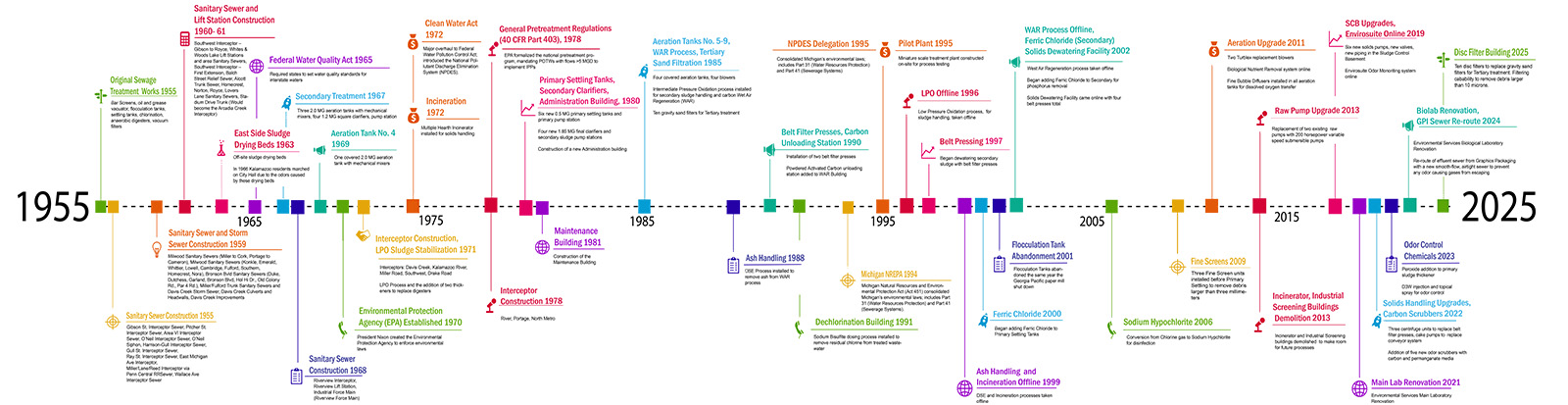
Click Here to learn more about the Facility!
Public Tours are available by request Click here for the Request Form
How does wastewater get to the plant?
Wastewater from homes, businesses, and industries flows generally by gravity, to the Kalamazoo Water Reclamation Plant (KWRP). Where terrain limits gravity flow, 66 lift stations pump wastewater to higher elevations, ensuring continuous conveyance to the treatment facility.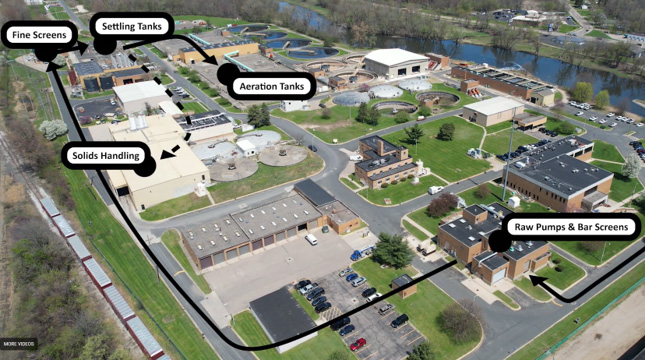

The Kalamazoo Water Reclamation Plant (KWRP) uses a high-tech system called Supervisory Control and Data Acquisition (SCADA) to help monitor and manage operations.
SCADA acts as the plant's "central nervous system," continuously collecting and displaying data from throughout the facility and from remote wastewater lift stations across the service area.
This real-time information allows KWRP's state-licensed Treatment Operations Supervisors to keep a close eye on how the plant is running and make immediate adjustments as needed.
Why Screening First? Wastewater starts with a screening step to catch and remove big junk like sticks, plastics, rags, and other trash. This protects pumps and machines from damage, stops clogs in pipes, and keeps the whole treatment running smoothly.
Pumping to Primary Treatment: After screening, strong pumps push the cleaned-up water to the next stage. These big pumps handle huge amounts of water steadily, keeping everything flowing at the right speed and pressure.
Smart Automation: Computers (watched by staff) control the pumps to keep the flow even and reliable, so water moves consistently to the treatment areas without surprises.
Step 1: Grit Removal Wastewater flows into two grit tanks where heavy sand, gravel, and grit sink to the bottom. Air is bubbled in to create a swirling motion, keeping lighter organic stuff (like food bits) from settling with the grit. This protects pipes and equipment from wear.
Step 2: Fine Screening Next, the water passes through three fine screens that catch smaller floating trash bigger than 3mm (about the size of a small pea). This removes extra debris that bigger screens missed.
Step 3: Sedimentation The water then goes to one of six large tanks where solids sink to the bottom (called sludge) and are scraped to one end, then pumped away for further treatment. Meanwhile, fats, oils, and greases (FOG) float to the top, get skimmed off, and sent to solids handling too.
Special PAC Treatment: The KWRP uses powdered activated carbon (PAC)-a super-absorbent powder-added before secondary treatment. This innovative step soaks up tough pollutants from industries (like chemicals or dyes) that other plants struggle with, without needing extra cleanup beforehand.
Secondary Treatment
Biological Treatment Basics: After PAC, water moves to secondary treatment, where tiny microbes (like bacteria) eat up dissolved organics and tiny particles.
It's like a natural cleanup crew breaking down waste into harmless stuff!
Aeration Tanks in Action: Nine huge tanks (each holding ~2 million gallons) mix air into the water to feed the microbes. About 500,000 pounds of "biomass" (the microbe team) works here, treating the water for around 8 hours to purify it thoroughly before the next steps.
Final Clarification Tanks
Settling Out the Good Bugs: After aeration, water flows into clarifiers (settling tanks) where the helpful bacteria and biomass sink to the bottom. Most of this "sludge" is recycled back to the aeration tanks to keep the microbe team strong.
Waste Management: A small amount of excess sludge is sent to solids treatment to control the population and prevent overload.
Next Stop: The clearer water on top moves to tertiary treatment for final polishing before safe release!
Tertiary Treatment
Disc Filters: Ten big disc filters act like fine sieves, trapping tiny leftover solids, microplastics, and carbon bits using a 10-micron mesh (super fine, like coffee filter level). Backwashing (rinsing backward) cleans the filters by flushing out trapped junk.
Removing Pathogens
Disinfection Step: Filtered water gets treated with chemicals (like chlorine) to kill harmful germs and bacteria that could cause disease.
Safe Release: Before dumping into the Kalamazoo River, the water is dechlorinated (chlorine removed) to protect river life-ensuring the final effluent is clean and safe for the environment.
Solids Handling Facility
Dewatering with Centrifuges: The facility uses three fast-spinning centrifuges to squeeze water out of mixed sludge from primary and secondary treatment. The spinning force (centrifugal) separates liquids from solids, turning watery sludge into thicker "cake."
Prep with Polymers: Before spinning, a special chemical (polymer) is added to clump the sludge particles together, making it easier to remove water and boosting the process efficiency.
Storage and Transport: The dewatered cake goes into a pump system, then one of three storage bunkers. When ready, a front-end loader scoops it into trucks for hauling to a landfill.